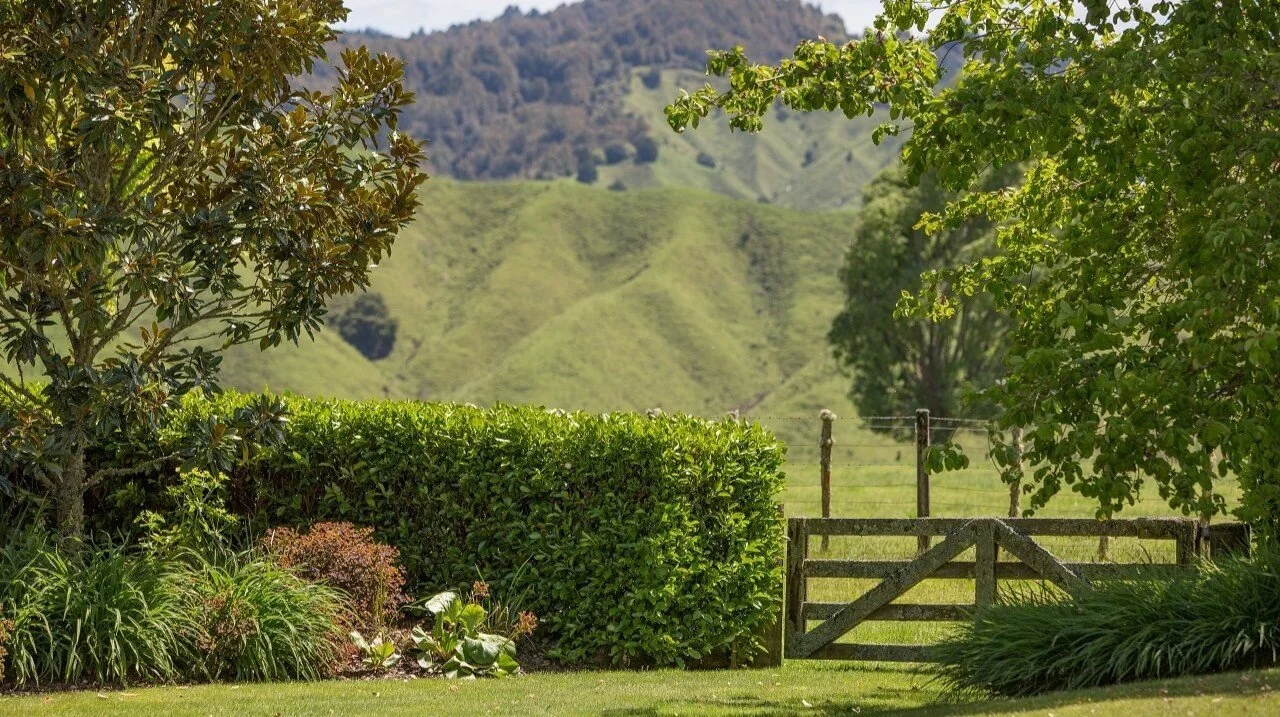
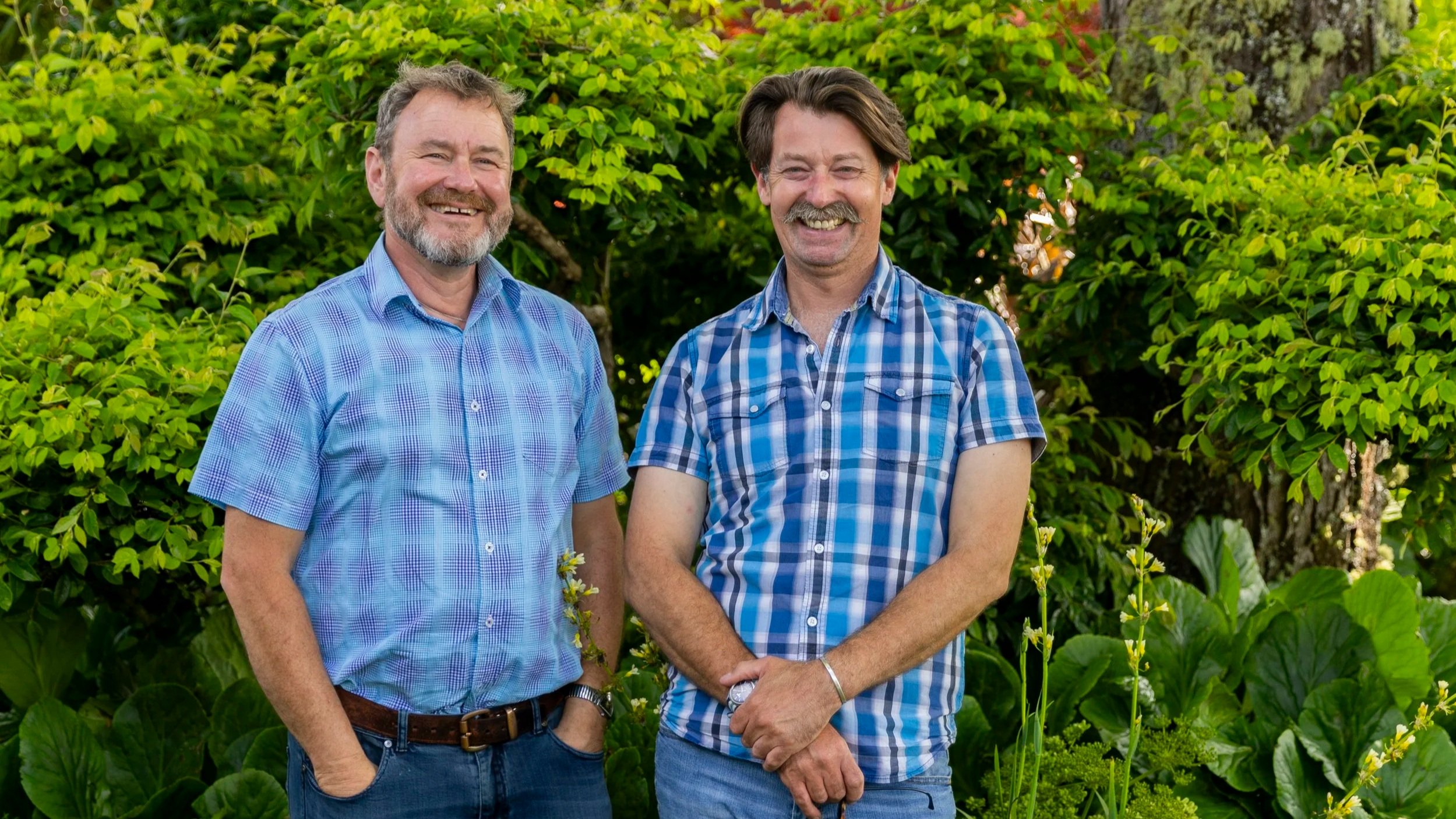
Q&A : Scott and Christopher from The Omaka Gardens
By Victoria Read with Scott & Christopher
What did you find when you arrived in 2017, and did you know what you were taking on?
We found a beautiful property with a wonderfully documented history! In early 2017, we bought 10.5 acres near Taumarunui, including a large homestead surrounded by 2 acres of established country garden. We bought Omaka from the original owners, Ken and Gaye Street, who commenced the garden soon after the house was completed in 1978. Better still, the original garden blueprints survive, having been drawn up by the well-known Peter Fraser of Fraser’s Nursery (later Growing Spectrum). We also have the 2006 plans by well-known Palmerston North landscape designer Lyndsay Chadwick. Together with a multitude of photos, they provide a fascinating insight into the garden’s evolution.
We knew what we were taking on, and the scale of the garden and house were why we bought the property. Chris is a qualified landscape designer, so he was in his element taking on the garden – whilst recognising the challenge of taking on someone else’s established garden and making it our own. Meanwhile, Scott immediately felt at home amidst the large country garden, having grown up on his parents’ ½ acre garden and his grandparents’ 2 acre garden.
The garden is a series of rooms — the Champagne Lawn, the Dell, the Rill. Do you each have a favourite?
Chris: For me, it’s different rooms in different seasons. At this time of year, I love the Secret Garden with its daffodils and Daphnes filling the air with scent. As spring arrives, the Champagne Lawn becomes a riot of colour from the Rhododendrons and deciduous Azaleas. The Wedding Garden is a profusion of roses and lilies in summer; in autumn I love the autumnal colours throughout the entire garden!
Scott: For wow factor and stunning outlook, it’s the 33-metre-long Rill we put in in 2018; and for peace and tranquillity it’s the Secret Garden we developed from 2020. But I love lawnmowing, so my favourite room is the Champagne Lawn where I can mow cross-hatching into the lawn!
Will you tell readers the story of the Second Husband Garden, or must they visit to find out?
Readers will need to visit, because, like many of the garden’s stories, it really needs to be told on site, as it refers to a specific area of the garden. But what I can say is we’re both on our first marriage and no previous husbands are buried there!
Who decides what happens in the garden — and who wins when you disagree?
Definitely Chris! He has the passion and the plant knowledge, not to mention the training. Scott defers to Chris as long as he has lawns to mow that don’t gain plants in annoying places! Scott has occasionally questioned Chris’ judgement, only to have to eat humble pie as the idea comes to fruition.
What has the site itself taught you the hard way?
That Liquidambars, of which we have around 50, are the devil’s work. They were planted alongside the driveway from the mid-1980s, and thanks to perfect growing conditions, they grew very tall very quickly. Unfortunately, being Liquidambars, they suffer from ‘included bark’. This doesn’t mean there’s a dog tied up to them, but that the joins between trunks and branches can be very weak. They self-prune with alarming regularity during windy stormy weather, so we’ve learned the hard way that a sharpened chainsaw is a permanent necessity.
Which tree or plant do you feel most custodial about?
We have many unusual and interesting trees here, but we feel most custodial about three:
Our large and rare Fern-leaved Beech, Fagus ‘Aspleniifolia’ (‘Heterophylla’). Identified by Peter Fraser as most likely grown by Peter Cave’s Tree Nursery in Cambridge, from seeds from the Eastwoodhill Arboretum.
Our two Himalayan Rhododendrons, grown from seeds brought into NZ from the Himalayas (don’t ask how!) in the 1980s by a Taumarunui Rhodie enthusiast. The leaves and flowers are simply enormous!
Our 80-year-old Kalmia. Originally located elsewhere on the farm, it was dug up by tractor in the 1980s and brought to Omaka. The garden it came from was riddled with Oxalis, so the Kalmia was hung from the tractor forks for three days while previous owner Gaye painstakingly scrubbed the roots clean. It worked, and nowadays the Kalmia is Oxalis-free, about five metres tall and flowers beautifully.
What did the Five Star rating mean to you both?
At first, a lot of pressure! But more than anything, it was a huge honour and incredibly humbling. Receiving a Five Star rating felt like recognition that we’d successfully built on the wonderful foundation created by Ken and Gaye Street, while adding our own chapter to the garden’s continually evolving story. We see ourselves not as owners, but as the current custodians of a special place. Our role is to respect what came before us, add our own chapter, care for it and leave it even better for those who come after us. We never set out to chase awards; we simply wanted to create a beautiful garden to share, and the Five Star award encourages us to keep striving for that.
What's next for Omaka?
Well, our primary business, which helps support the garden, is our B&B, so every project needs to benefit both. We’ve just completed a wonderful new Orangerie, allowing guests and garden visitors to enjoy the garden whatever the weather or the season. Over the next few years, we’ll replace the tennis court with lawn, fountain and perennial borders inspired by Emmett’s Garden in England - planting has commenced in preparation. Looking further ahead, we’re planning a spectacular stained-glass glasshouse, using around 30 stained-glass windows rescued from a demolished Wellington church. But until then, we’ll keep doing what we love most - sharing our tranquil oasis amidst New Zealand’s Forgotten World!