Q&A: Antoinette van der Weerden
For those who haven’t yet visited Waitakaruru, how would you describe the arboretum and what makes it such a special place?
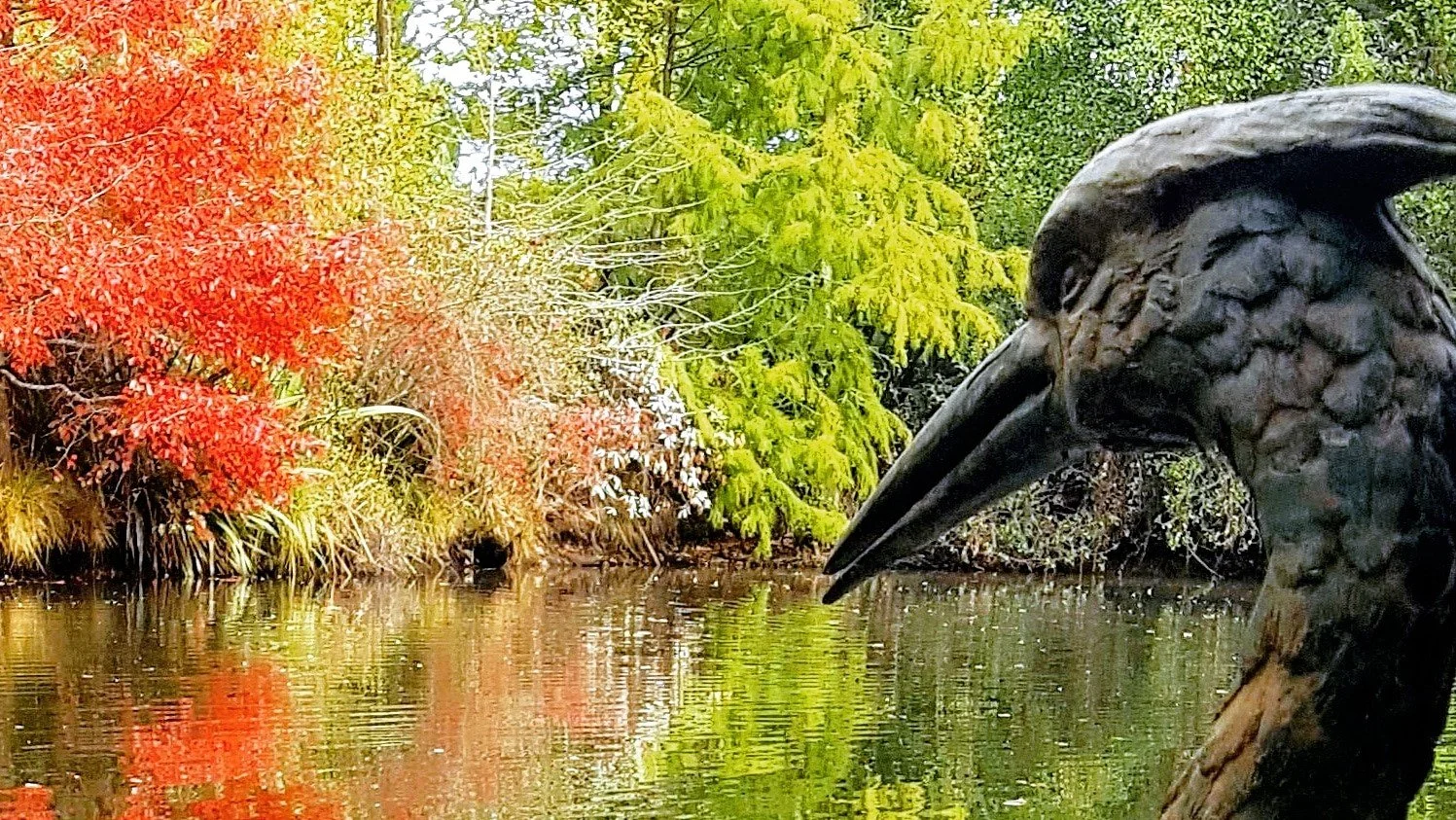
When people visit this parkland, they always say how wonderful it is, the combination of sculptural pieces with the garden spaces and trees are surprising, and they often reflect on the fact that they have lived close by for 20-30 years and didn't know it existed. It's the relaxed feel of the place they comment on. The Arboretum offers a restorative nature experience through a garden planted by an expert plantsman/arborist, John Wakeling. Johns engagement with the natural world captured in his sketches informs his work here at the park; the tree groupings, the framed views, the environmental conditions of each nook and cranny have all been maximised, as seen by the plant selection and placement.
The fact that this place was once an industrial wasteland and now houses an extensive sculpture collection, and Arboretum is testament to the perseverance and dedication of the founders, Dorothy and John Wakeling. The quarry aspect of the site is not really appreciated till visitors reach the quarry pond, and only then can the restoration process he fully appreciated. However, if you were to plant anything in this site, you would fairly quickly appreciate the history. It's rare to be able to slide your spade through a luscious topsoil here. It's more often we use a small pick axe to glean a hole for a new plant or tree.
Can you tell us a little about your own connection with Waitakaruru, and what you enjoy most about your role as manager of The Sculpture Park?
I had visited the park once or twice in the distant past, having brought landscape students here while teaching at Wintec, but visited more frequently over the past 2-3 years. John Wakeling and I ran into each other at various plant and tree sales, but that was all really.
The experience of the space stands out as a memory so when I see visitors also enjoy the garden, the various vistas and scales, and the welcoming experience by our front of house staff, its these aspects which I enjoy seeing; sharing a garden space that instills relaxation, a sense of freedom and beauty is the best thing about my role. Change will inevitably occur, so improving visitor experience is a challenging and enjoyable aspect to the role too.
The Sculpture Park brings together contemporary sculpture and an established landscape. What do you think makes the relationship between the artworks and the arboretum so successful?
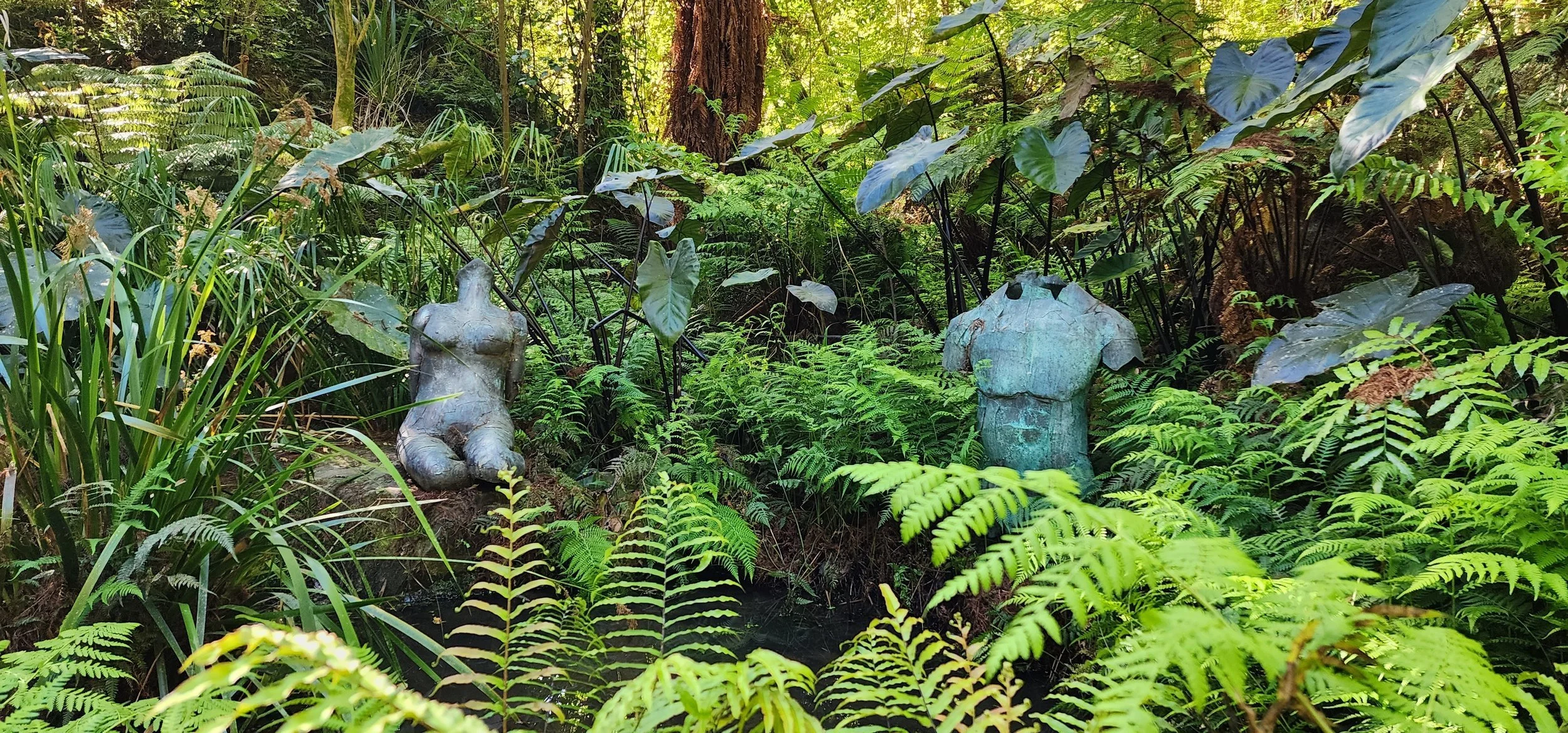
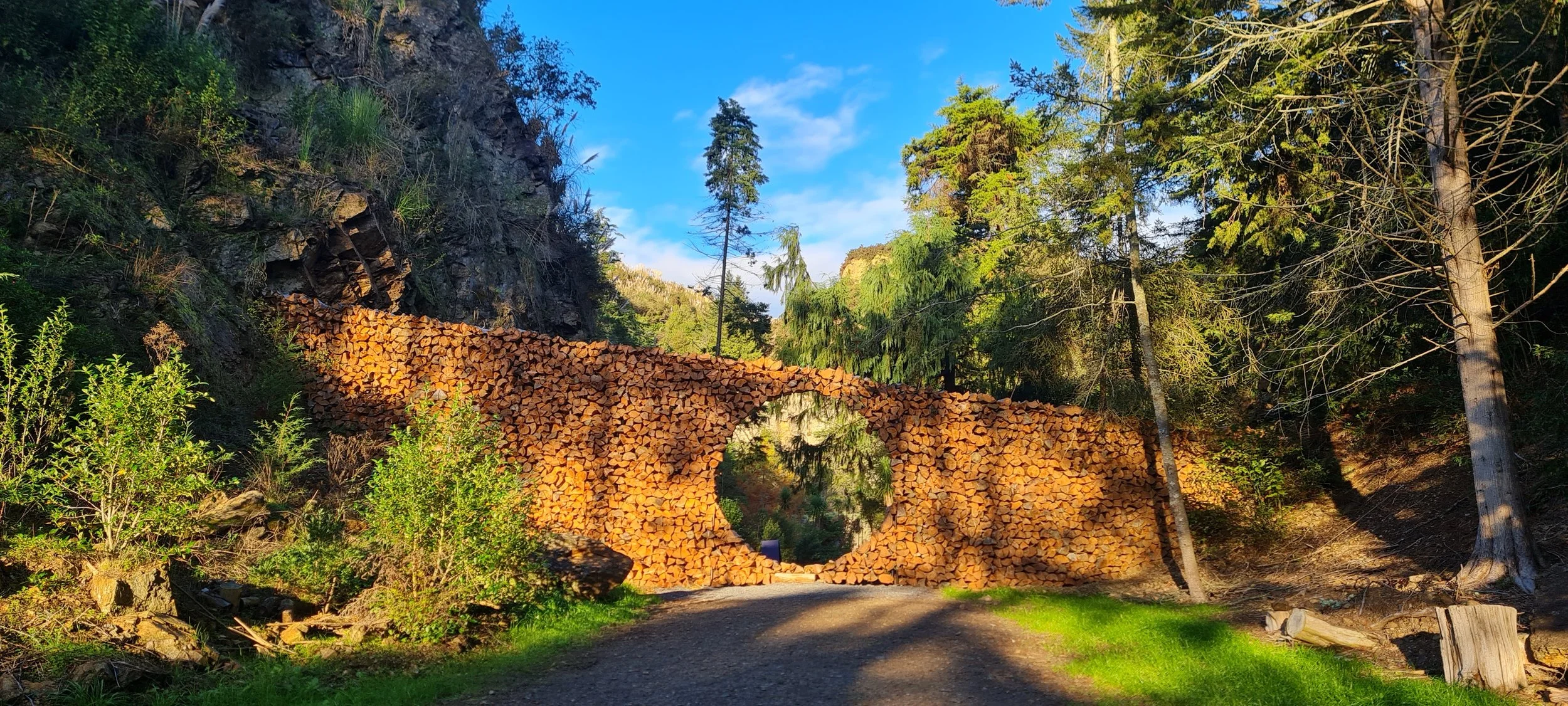
The sculptural works and arboretum exist in comfortable harmony, each enhancing the presence of the other. Placement becomes an essential consideration and an art form in itself. The careful framing of a sculpture within the landscape is fundamental to its success, shaping how it is discovered, interpreted, and experienced. Scale is equally important. Larger works sit comfortably within the park's monumental landforms, such as Conifer Canyon, where Marcus Tatton's Portal simultaneously connects, divides, and frames the surrounding environment.Over the past thirty years, the maturation of the trees has created scaleable opportunities for sculpture to engage with the landscape. This evolving relationship between art and nature deepens the visitor experience, offering new perspectives and moments of discovery throughout the park.
Among my favourite works are Dermott Kelly's Pharos series, described as "beacons of light to light the way." Combining glass and iron, these sculptures evoke a sense of whimsy, recalling moments of Narnia while remaining grounded in material strength and permanence, glass and iron. Positioned within key focal points, they invite pause and reflection, slowing the visitor's journey while enticing them onward.
Throughout the park, art and nature are inseparable companions. The forms of trees, land, light, water and sculpture speak to a shared human instinct to create and experience beauty. The landscape becomes both gallery and muse, and where every encounter offers an opportunity for inspiration and reflection.
Waitakaruru has developed and evolved considerably over the years. What are you most excited about for its future?
I am excited to develop the visitor experience, by amplifying the sculptural aspect of the park, really bringing this to the surface more actively. We have a Sculpture Sub committee looking at ways for this to happen at a range of levels.
Compliance is always front and centre too, so improving infrastructure has begun with a new set of stairs leading visitors to the quarry pond. Other aspects I am focusing on include an accessible bathroom, an accessibility loop, while also dipping into my favourite aspect: the garden! creating a strong sense of place with interesting planting, increasing the tree species range to build the arboretum, and amplifying the seasons is where my natural feeling leans into.
Finally, if you had a free afternoon to wander around Waitakaruru as a visitor, what would you do — and where would you stop along the way?
If I had a free afternoon! I regularly walk through the park, with my manager hat on, always looking, noticing, noting down aspects for improvement or attention, but when I walk through as a free being, the area from the Rock garden stands out. In early morning or when the lights fading at the other end of the day, the silhouette of forms and textures here are other worldly, surreal and astonishing. Although we know it as the Rock garden, this is not an accurate description as everything has grown so well, tumbling over each other, succulents, palms, gums, all things that love a hot dry environment
From here the entrance space to the Asian section, down around the ponds under the Chinese Elms has a particular sense of peace and this leads to the track through the Asian section, looking out across the Waikato basin across to Pirongia and sometimes Karioi. It's great to get a geo-reference of the site.
The crest of the quarry provides spectacular views of the canyon cliffs, and dropping down into the space amplifies the scale and grandeur of the space. The ring of cliffs surrounding the quarry pond creates an Amphitheatre for sound and light. The reflective nature of the watery quarry pond enhances this space too. One of my favourite sculptural pieces is Dorothy Wakeling's 'Twirl' . She sits so peacefully in the pond, pondering. This is a perfect piece for the spot as it engenders a space and time for pondering things within the curve of the cliffs reflected in the still waters, until the frog chorus brings you back!
Coming through the drama of 'The Portal' by Marcus Tatton in Conifer Canyon transports me to the gentle curving walk where the scale of the 30yr old pines frames the views across the neighbouring farm, and beyond. The contrasting landscapes support each other in their difference.
It's the top end of the park that holds the natural drama, and while we work on improving a sense of place in all parts of this garden, the areas associated with the original quarrying operation, improved by John Wakeling's tree network that create a sense of awe.