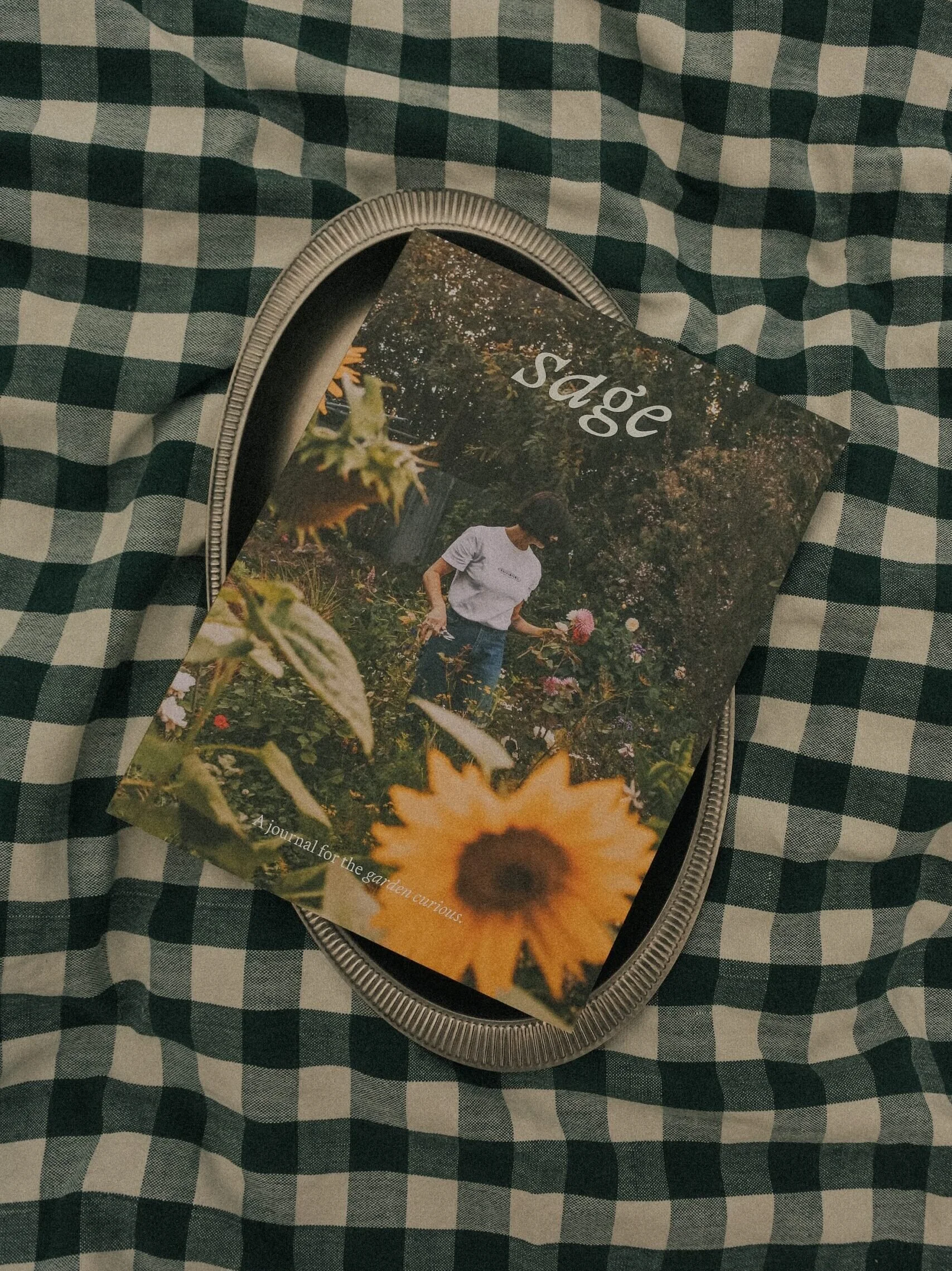
Q&A with Emma Sage, The Sage Journal
By Victoria Read with Emma Sage
To begin, could you tell us a little about yourself — where you’re based, who you share life with, and what first drew you into the world of gardens?
I’m based in Havelock North (Hawke’s Bay) with my husband Tristan and our three young children (ages 9, 7 and 4). I’ve always been surrounded by gardens. I come from a line of gardeners, and grew up with my mum and nana always just a phone call away for garden and plant advice. My family’s gardens (some on farms, some in town) were very different in style, but were all places of beauty, care and lots of activity. I think much of my love for gardens seeped in by osmosis way back then.
However I think it was when we bought our first home in Christchurch (12 years ago) that it really clicked. I had a space of my own to care for, experiment in and learn from. I got hooked – not just on growing things, but on the feeling a garden can create. I loved the process of imagining what a space could become, slowly seeing a vision come to life.
What prompted you to establish Sage Journal, and what gap were you hoping it would fill in the garden publishing landscape?
When we bought our first home, I realised how hard it was to find local, relatable garden inspiration. There was some beautiful inspiration out there, but not much of it felt grounded in New Zealand gardens, or spoke to a younger generation of gardeners who were learning as they went.
I had a background in communications and brand, so combining that with my growing passion for gardening (which continued to develop as we moved into our next home in Hawke’s Bay), I decided I wanted to create a platform that shared real garden stories – gardens that weren’t necessarily perfect, people who were figuring things out, and who were on a journey of discovering what the art of growing brought to their lives.
We started online (with articles on our website and a growing social media following), and took the leap to launch our first physical print journal last year (Sage Vol. 1) – something we plan to continue annually.
I wanted to build a sense of community around gardening and growing, and Sage Journal was born from that – a place to connect gardeners, share knowledge, and make gardening feel more accessible and inspiring for people both young and old.
How would you describe the editorial lens of the journal — what makes a garden or story feel right for Sage Journal?
I’m always drawn to gardens that feel lived in and personal. It’s not about perfection, it’s about character, care and the relationship between the person and the place.
A story feels right for Sage when there’s a depth to it, a sense of curiosity in those who tend them, and often a sharing of knowledge/wisdom. We love gardens that reflect the lives of the people behind them – whether that’s through the plants they choose, the way they use the space, or the stories behind how growing impacts their lives.
Gardens often reflect the lives of the people who create them. What aspects of your own life most influence the way you see and document gardens?
I think both growing up on a farm (I was the 6th generation in my family to live on it) and my natural affinity for storytelling have shaped the way I document gardens. I’m passionate about knowledge being passed down through conversation, rather than pure instruction.
I’m also very aware of the stage of life I’m in, with young children and a busy household. It means I’m drawn to the idea that gardens are never truly ‘finished’ – they’re always a bit imperfect and continue to evolve over time. That’s something I find really refreshing, and I hope others can glean the same feeling, so they feel less daunted to try gardening themselves.
It’s probably also why I’m so interested in the more everyday moments in a garden… not just how it looks, but how it’s lived in.
When you’re visiting and documenting a garden, what are you looking for beyond what the camera captures?
I’m always interested in the feeling of a place… how it’s used, and what stories sit behind it. There’s so much more in the conversations you have with the gardener than what a camera can capture.
I often ask what influenced them to start gardening, and how that’s evolved over time. What’s worked, what hasn’t, and what they’ve learned along the way. The why, the trial and error, and the small decisions over time are often what make a garden most interesting.
As someone observing the sector closely, what shifts or emerging themes in garden design or stewardship are you finding most interesting?
There’s a shift towards more natural, ecological ways of gardening (not a new phenomenon, but something younger gardeners are grasping onto with gusto). Working with soil biology, planting more densely, and thinking about gardens as living systems rather than something to be controlled or perfected. The focuses often being productivity (edible), ecology and/or beauty.
I visit Melbourne for industry events each year, and the idea of planting for climate resilience, drought tolerance and low input in urban and public spaces is strong over there. A real focus on plants that can cope with changing conditions, but still bring beauty and texture to otherwise derelict spaces (eg. rooftop carparks). The idea of designing with and for nature, rather than just for ourselves.
More broadly, I think there’s also a renewed appreciation for gardening, as a younger generation taps into it as something grounding and essential in life. Growing food, creating beauty, supporting the environment or simply having a place to enjoy. It feels like more people are turning to gardening as a way to reconnect with nature and with themselves.
Looking ahead, what feels most important for you — personally and professionally — as Sage Journal continues to evolve?
Personally, I’m always trying to find a bit of a balance between young family life, running Sage Journal and having enough time in my own garden (always a work in progress!).
With Sage Journal, it feels like we’re only just getting started. There’s so much more we can build – continuing with online and print through our annual journals, exploring new ideas, and creating more opportunities for community, collaboration, and sharing the wonder of gardening.
For readers who are interested in Sage Journal, how can they best follow and access your work — for example, through your online magazine, mailing list or the annual printed journal?
Visit our website for regular garden articles: thesagejournal.com (sign up for our fortnightly email while you’re there, with new articles, events and product releases)
Social media: Instagram (@sage.journal), Facebook and Pinterest
Purchase the journal via thesagejournal.com or through one of our stockists around the country