Longbush Cottage - The garden that grows joy
By Luke Gardner
One of the greatest joys of having a garden is being able to pick flowers and foliage, create arrangements, and bring a little of the garden’s beauty indoors. Yet, because my garden is often open to the public, I’ve always been a little reluctant to cut flowers from the borders and displays. I love sharing the garden at its best, and didn’t want to spoil it for visitors.
That dilemma has now been beautifully solved with the creation of a dedicated cutting garden. It’s wonderfully liberating to be able to cut flowers to my heart’s content without compromising the beauty of the main garden beds. In fact, I now feel guilty if I don’t pick from the cutting garden!
The Joy of Flowers
My favourite annual for cutting is Ammi majus, which looks a lot like Queen Anne’s Lace but is much better behaved — it doesn’t flop about like a rag doll after a summer breeze. I let it self-seed throughout my white garden, but I also scatter extra seed in the cutting beds so I can harvest armfuls for arrangements.
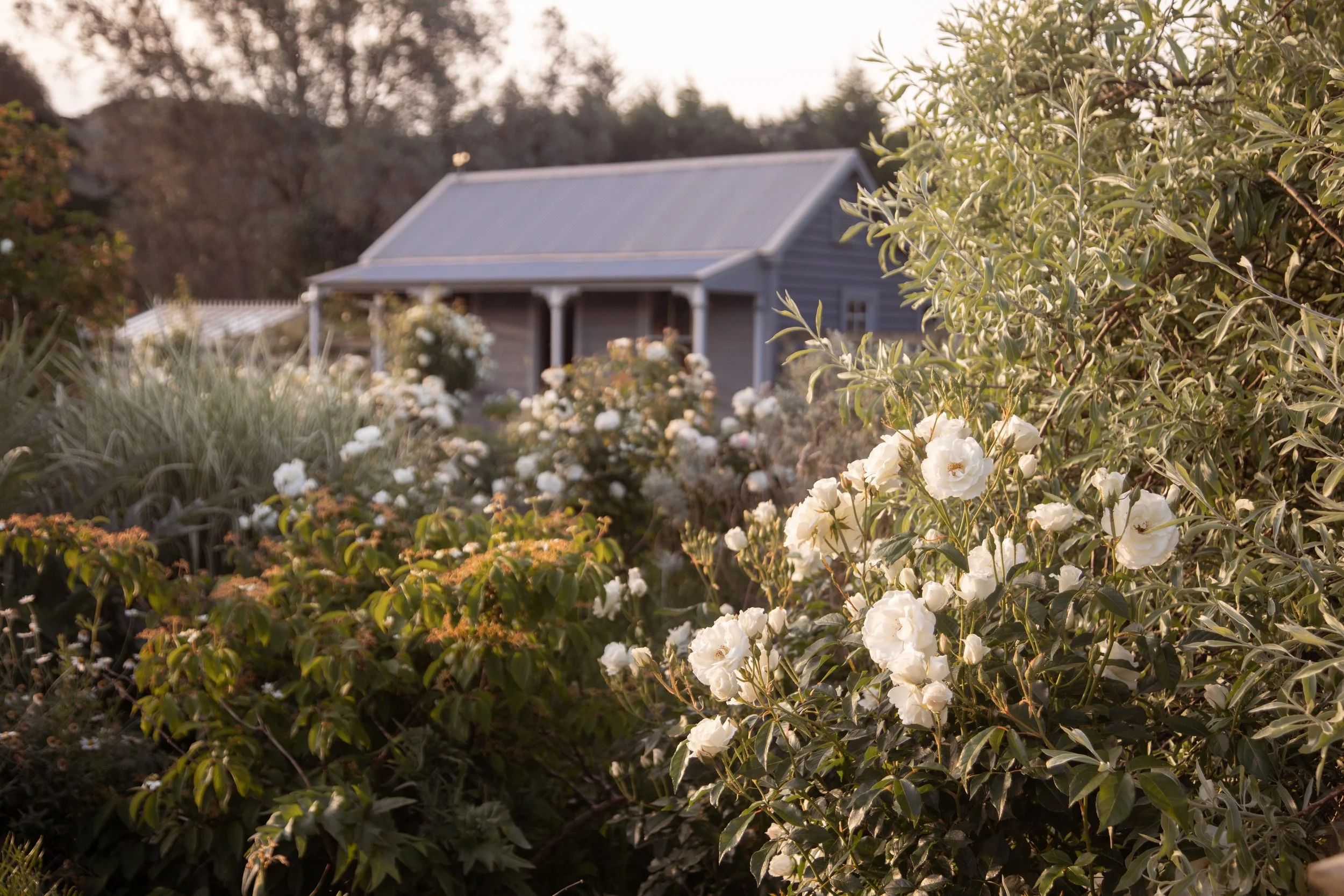
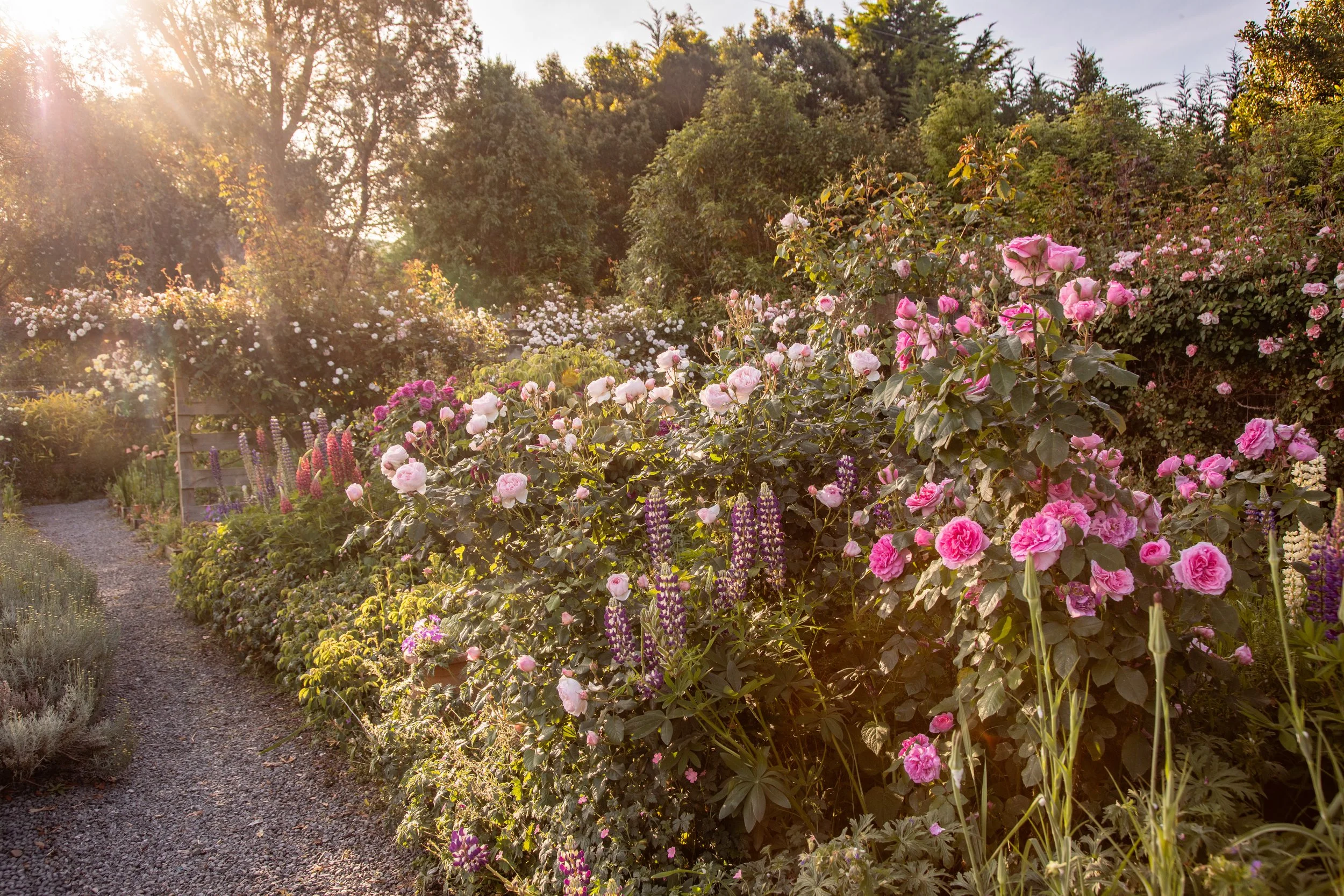
In my white garden I indulge my love of white blooms and silver foliage. My lipstick garden bursts with hot pinks, reds, and magentas, while the pastel garden offers soft blushes, mauves, and apricots. With 15 distinct garden spaces — from the tranquil woodland to the exuberant cottage borders — and over 8,000 tulips, Longbush Cottage is far too big for one person to maintain perfectly. My approach is simple: a garden should bring you joy. If a few areas get a bit weedy, I simply turn my gaze to those that are looking wonderful.
How It All Began
You might wonder how such a large garden came to be. It all began ten years ago when I bought a little cottage sitting on an entirely bare one-hectare paddock — a blank canvas waiting to be transformed into the cottage garden of my dreams.
Before that, I’d spent a decade tending a hillside garden around an old villa in Wellington. That steep section taught me resilience, experimentation, and the joy of lifelong learning — because gardening, after all, is an ongoing journey of discovery through every plant, weed, and folly.
I began by drawing up a detailed plan in Visio, mapping out a series of interconnected garden “rooms,” each with its own colour palette and planting style. When I moved to the paddock, I followed that plan almost exactly — just on a grander scale! The cutting garden is laid out in ten rectangular beds separated by gravel paths for easy access. The layout includes an avenue of clipped tōtara leading to a pond framed by ornamental grasses, fruit trees, and perennials.
Growing, Adapting, and Creating Spaces
When my partner and I became the New Zealand distributors for Lams Glasshouses, I needed to find spots for four display houses. Rather than mourn the loss of flower beds, I incorporated the glasshouses into the overall design. They now enhance the structure of the garden while providing invaluable frost-free and wind-sheltered growing spaces.
At year five, I opened Longbush Cottage to the public as part of the Pūkaha Mount Bruce Garden Tour, a fundraiser for our local wildlife sanctuary. Opening those gates for the first time was nerve-wracking, but visitors were wonderfully supportive — many have returned year after year to see how the garden evolves.
Now, ten years on, we’re open every day except Tuesday and welcome guests from all over the world. One of the glasshouses houses the Longbush Cottage Emporium, where I sell garden-inspired gifts and homewares — a much-loved part of the visitor experience.
Festivals and Seasonal Celebrations
From the beginning, I’ve sold plants I’ve propagated for the garden. Over time this evolved into several annual events. The first was the Tulip Festival, now in its fifth year. The idea began when I invited friends to enjoy the tulips — they loved them so much that I used it as an excuse to plant more! Now I plant about 8,500 tulips each season.
Unlike formal botanical displays, I prefer a cottage-style jumble of tulips, grouped loosely by colour for a natural effect. Each year, I buy new bulbs for my pots, then after flowering I lift them green, dry them carefully, and replant them in May with a dose of blood and bone. During the festival, I sell tulip pots so visitors can take a little piece of Longbush Cottage home.
We also celebrate the roses, which flourish in our heavy clay soil and sheltered conditions, and later the perennials that carry the garden into autumn. Together with Parkvale Gardens, I co-host the Wairarapa Plant Fair, where local growers share their expertise and regional treasures.
In winter, I once closed the garden for its annual tidy-up — pruning, cutting back, and mulching. But the garden’s stark winter beauty proved irresistible, so I now open for ten special days in July, decorating the glasshouses for a Midwinter Christmas with seed heads, dried foliage, and sculptural forms.
Recognition and Philosophy
In year eight, I joined the New Zealand Gardens Trust and was thrilled to receive a Four-Star “Garden of Significance” rating. Being a part of the Trust has had a significant positive impact on visitor numbers and I enjoy being a part of the gardening community and the friendships and experiences that come with it.
The scale of Longbush Cottage means I’ve had to be both creative and experimental with propagation, always learning what thrives in our challenging Wairarapa clay — wet in winter, parched in summer, and occasionally frosty even in December! My mother always said, “You have to garden to your conditions,” and that philosophy has served me well.
I garden for joy, not perfection. That means no insecticides, no obsession with lawns, and a focus on plants that bring happiness rather than hard work.
The Cutting Garden and Beyond
Last autumn, I reworked the cutting beds completely — stripped them bare and started again. I love the freedom of mixing colours and experimenting, though a batch of banana-yellow lilies taught me that sometimes colour surprises are best relocated to the “hot” garden!
In the cutting beds I grow dahlias, gladioli, tulips, cosmos, alstroemeria, and a range of annuals. Annuals can be tricky in our dry springs, but I rarely water — except for pots, the veggie patch, and the nursery — preferring to let plants adapt naturally. Dense planting, heavy mulching, and wind shelter help enormously.
The cutting garden doubles as my testing ground for new varieties. My only real disaster was planting the chocolate form of wild carrot (Daucus carota)— which promptly reverted to white and now cheerfully seeds itself everywhere! It’s hard to be too cross, though, since the bees adore it.
I also adore dried materials — teasels, cardoons, and sculptural seed heads bring texture and interest long after summer fades. I spray-paint teasels for Christmas decorations, and in my tiny cottage, where space is limited, dried arrangements have become my year-round companions.
A Garden Shared
My garden brings me joy in every season, and sharing it with others has become one of the greatest rewards of all. Visitors tell me it inspires them to garden with more courage and creativity — and that is the best compliment of all.